
-
Medal of Honor

History:
The Medal of Honor was established during the American Civil War as the United States’ highest military decoration for valor. Although General George Washington had created the Badge of Military Merit in 1782, it had fallen into disuse after the Revolutionary War and was separate from the Medal of Honor. As the fierce fighting and deeds of valor during the Civil War demonstrated the need to recognize exceptional courage, Congress first authorized the Medal of Honor for Naval personnel on 21 December 1861. Legislation for an Army Medal of Honor was introduced in the Senate on 17 February 1862, approved by Congress, and signed into law by President Abraham Lincoln on 12 July 1862. The original act authorized two thousand “medals of honor” to be presented, in the name of Congress, to noncommissioned officers and privates who most distinguished themselves by their gallantry in action and other soldier-like qualities during the war. On 3 March 1863, Congress made the decoration permanent and extended eligibility to commissioned officers. From these Civil War origins, the Medal of Honor evolved into the nation’s highest military award for extraordinary heroism and valor in combat.
Prerequisite:
The Medal of Honor will be awarded to an individual of the 5th Special Forces Group who has made a sacrifice greater than life itself.
-
Distinguished Service Cross
History:
The Distinguished Service Cross was established by President Woodrow Wilson on January 2, 1918. General John J Pershing, commander-in-chief of the expeditionary forces in France, had recommended that recognition other than the Medal of Honor be authorized for the United States Army for valorous service rendered in like manner to that awarded by the European armies. The request for the establishment of the medal was forwarded from the secretary of war to the president in a letter dated December 28, 1917. The act of Congress establishing this award (193-65th Congress), dated July 9, 1918, is contained in 10 U.S.C § 3742. The establishment of the Distinguished Service Cross was promulgated in War Department General Order No. 6, dated January 12, 1918.
Prerequisite:
The Distinguished Service shall be awarded to the individual who has displayed multiple acts of extraordinary heroism in action against enemies of the United States during an Operation or Campaign.
To be awarded, the awardee must have five (5) separate witness statements a paragraph in length, videographic or photographic evidence of the gallantry in act, and the act must have made a significant impact
-
Defense Distinguished Service Medal

History:
The Defense Distinguished Service Medal (DDSM) was established by Executive Order 11545, 9 July 1970. It is awarded by the Secretary of Defense to officers of the Armed Forces of the United States whose exceptional performance of duty and contributions to national security or defense have been at the highest levels. Normally, such responsibilities deserving of the Defense Distinguished Service Medal are held by the most senior officers such as the chairman and vice chairman of the Joint Chiefs of Staff, the chiefs and vice chiefs of the military services, and commanders and deputy commanders of the combatant commands, the director of the Joint Staff, and others whose duties bring them frequently into direct contact with the secretary of defense, the deputy secretary of defense, and other senior government officials.
Prerequisite:
The Defense Distinguished Service Medal shall be awarded to the Non-Commissioned Officers and Officers that have been in the unit for 10 (ten) years Time in Service, in service of a position with enormous responsibilities.
-
Distinguished Service Medal

History:
The Distinguished Service Medal is awarded to any person - effectively, general officers - who, while serving in any capacity with the United States Army, has distinguished themselves by exceptionally meritorious service to the Government in a duty of great responsibility.
Prerequisite:
The Distinguished Service Medal shall be awarded to officers and senior Non-Commissioned Officers who have demonstrated exceptionally meritorious service in a position of great responsibility. The award recognizes sustained superior leadership, strategic impact, and lasting contributions and significantly advance the effectiveness, structure, and long-term success of the unit.
-
Silver Star
History:
The Silver Star Medal (SSM) is the successor award to the Citation Star which was established by an Act of Congress on 9 July 1918, during World War I. On 19 July 1932, the secretary of war approved the conversion of the Citation Star to the SSM with the original Citation Star incorporated into the center of the medal. The Silver Star Medal is awarded for gallantry, so long as the action does not justify the award of one of the next higher valor awards: the Distinguished Service Cross, the Navy Cross, the Air Force Cross, or the Coast Guard Cross. The gallantry displayed must have taken place while in action against an enemy of the United States, while engaged in military operations involving conflict with an opposing foreign force, or while serving with friendly foreign forces engaged in an armed conflict against an opposing armed force in which the United States is not a belligerent party.
Prerequisite:
The Silver Star shall be awarded to the individual who has displayed multiple acts of gallantry in action against enemies of the United States during an Operation or Campaign.
To be awarded, the awardee must have four (4) separate witness statements a paragraph in length, videographic or photographic evidence of the gallantry in act, and the act must have made a significant impact
-
Defense Superior Service Medal
History:
The Defense Superior Service Medal (DSSM) was established by Executive Order 11904, 6 February 1976. It is awarded by the Secretary of Defense to members of the Armed Forces of the United States who, after 6 February 1976, rendered superior meritorious service in a position of significant responsibility. The DSSM is the United States Department of Defense's second-highest non-combat-related military award and the second-highest joint service decoration. It is given by the Secretary of Defense to members of the United States Armed Forces who render superior meritorious service in a position of great responsibility.
Prerequisite:
The Defense Superior Service Medal shall be awarded to the Non-Commissioned Officers and Officers that have been in the unit for 5 (five) years Time in Service, in service of a position with enormous responsibilities.
-
Legion of Merit

History:
The Legion of Merit (LOM) is a military award of the United States Armed Forces which is given for exceptionally meritorious conduct in the performance of outstanding services and achievements. The decoration is issued to members of the eight uniformed services of the United States as well as to military and political figures of foreign governments.
Prerequisite:
The Legion of Merit shall be awarded to Non-Commissioned Officers and Officers who have provided an exceptional meritorious service to the unit in non-combat related services in regards to their DMOS or for the unit as a whole.
Additionally, the Legion of Merit can be given in the following 3 grades.
- Soldier is award “Of the Year” honors and awarded w/E device
- Soldier is awarded LOM through actions in combat w/C device
- Soldier is awarded LOM through staff role actions and awarded w/ R device
-
Distinguished Flying Cross
History:
The Distinguished Flying Cross (DFC) is a military decoration of the United States Armed Forces. The medal was established on July 2, 1926, and is awarded to those who, after April 6, 1917, have distinguished themselves by single acts of heroism or extraordinary achievement while participating in aerial flight. Both heroism and extraordinary achievement are entirely distinctive, involving operations that are not routine.
Prerequisite:
The awardee must have distinguished themselves in operation by showcasing heroism or an extraordinary achievement while participating in an aerial flight as a pilot.
-
Soldier's Medal
History:
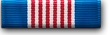
The Soldier's Medal is awarded to any person of the Armed Forces of the United States or of a friendly foreign nation who, while serving in any capacity with the Army of the United States, including Reserve Component soldiers not serving in a duty status at the time of the heroic act, distinguished himself or herself by heroism not involving conflict with an enemy.
Prerequisite:
The Soldier’s Medal shall be awarded to an individual who has been chosen as the Soldier of the Quarter.
-
Bronze Star
History:
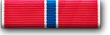
President Roosevelt authorized the Bronze Star Medal by Executive Order 9419 dated 4 February 1944, retroactive to 7 December 1941. This authorization was announced in War Department Bulletin No. 3, dated 10 February 1944. The Executive Order was amended by President Kennedy, per Executive Order 11046 dated 24 August 1962, to expand the authorization to include those serving with friendly forces. When the medal is awarded by the Army, Air Force, or Space Force for acts of valor in combat, the "V" device is authorized for wear on the medal's ribbon. Similarly, when the medal is awarded by the Navy, Marine Corps, or Coast Guard for acts of valor or meritorious service in combat, the Combat "V" is authorized for wear on the medal's ribbon.
Prerequisite:
The Bronze Star Medal shall be awarded to the individual who has displayed heroic actions or meritorious service while in combat.
To be awarded, the awardee must have two (2) separate witness statements a paragraph in length, videographic or photographic evidence of the act, and the act must have made a significant impact